Nexomatara
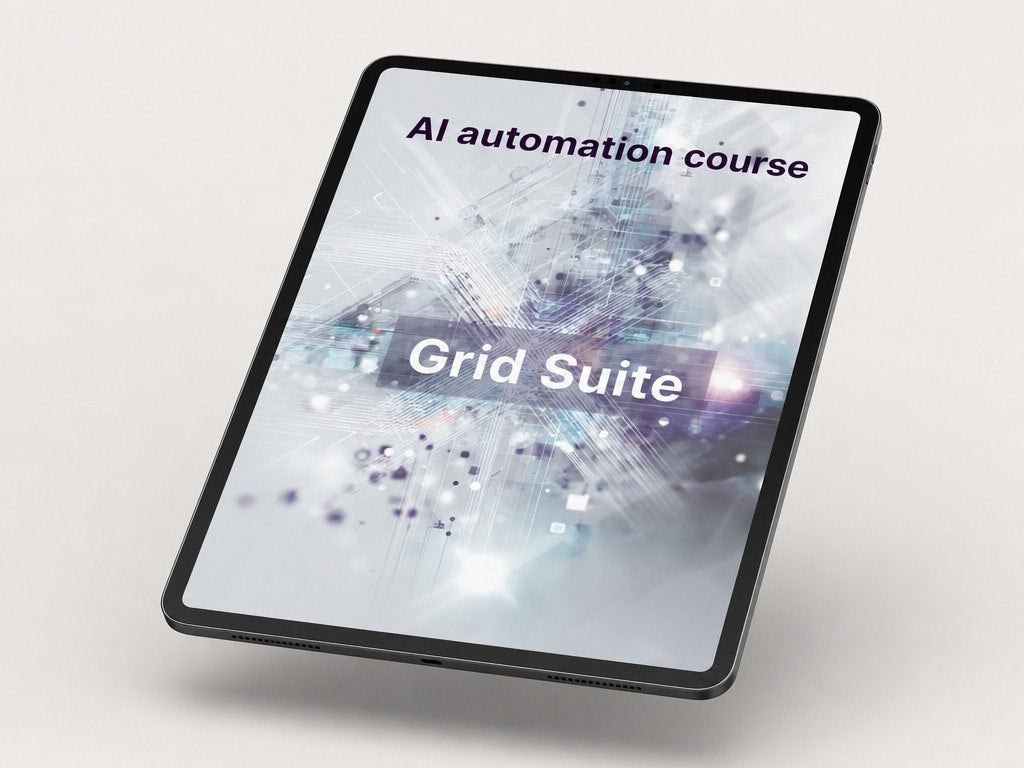
Grid Suite
Grid Suite
Couldn't load pickup availability
- 📁 Digital file available after purchase
- 🗂️ Long-term availability
- 🔐 Secure checkout
- 📝 Content updated in 2026
Self-paced learning overview
1. Problem Statement
When scenarios become longer, it is important not only to know separate stages but also to understand how they interact with one another. Without an overall process grid, it can be difficult to keep the connection between tasks, conditions, input data, and the final format. Because of this, the same workflow may look different each time, and learning materials can become harder to review. There is also a need for rules: how to name stages, describe transitions, review results, and update the diagram after practice. Grid Suite helps build an organized approach to more complex learning processes without tying the course to specific third-party programs.
2. Solution
Grid Suite teaches how to create a process grid where every block has its own function and place. The course shows how to divide a workflow into elements: task, context, data, prompt, middle result, review, and update. You will learn how to form your own learning tables, diagrams, and structure maps for different task types. The materials help compare processes and see which parts can be described in the same way for repeated scenarios. This tier is suitable for learners who want to work with broader systems of learning processes and view them in a more organized form.
3. What’s Inside
- Module 1: Grid Mindset — how to view automation as a grid of connected elements.
- Module 2: Process Cells — how to divide a workflow into small blocks: task, context, action, result, and review.
- Module 3: Naming Rules — how to give stages clear names so the process is easier to read and revisit.
- Module 4: Data Placement — how to define where starting data, clarifications, and middle materials appear in the process.
- Module 5: Prompt Grid Layout — how to build prompts as a structural grid with separate fields for purpose, conditions, and format.
- Module 6: Scenario Matrix — how to compare several scenarios by task type, complexity, number of stages, and review method.
- Module 7: Review Columns — how to create result review columns: content, sequence, completeness, and task relevance.
- Module 8: Rebuild Practice — how to update a learning diagram after the first exercise review.
- Module 9: Workflow Documentation — how to describe a process so you can return to it later.
- Module 10: Grid-Based Learning Set — how to format a set of learning processes as one structural system.
- Module 11: Process Maintenance Notes — how to record changes, refinements, and observations during continued learning.
4. Who is this for?
✅ A good fit if you...
- have already worked with several AI automation scenarios;
- want to create connected learning systems, not only separate workflows;
- like tables, process maps, structural diagrams, and consistent logic;
- want to better see where data, prompts, and review points are placed in a process;
- are looking for a tier with an in-depth approach to organizing learning materials.
❌ Not for you if...
- you are only beginning to explore AI automation;
- you need a very short introduction without expanded diagrams;
- you do not want to work with tables, maps, and learning exercises;
- you need training only for one specific third-party program;
- you expect specific personal, career, or financial outcomes without independent work.
5. What You’ll Learn
- how to create a process grid for a more complex workflow;
- how to divide a scenario into clear blocks;
- how to describe the role of each stage in the overall structure;
- how to form prompts with separate fields for purpose, conditions, data, and format;
- how to compare several scenarios in a learning matrix;
- how to add review criteria to each process;
- how to document a workflow for later review;
- how to update a diagram after completing exercises;
- how to create your own set of structured learning processes;
- how to keep materials organized during further topic study.
6. Review Terms
Grid Suite is created for learning a system-based approach to AI automation through maps, tables, and structural diagrams. It does not include claims about specific personal, career, or financial outcomes. The materials are intended for careful study, independent practice, and gradual skill development in process organization. Topic understanding depends on your participation, exercise completion, example review, and your own work with learning diagrams.
Who are these courses created for?
Who are these courses created for?
Nexomatara courses are intended for people who want to better understand how AI can support task organization, repeated actions, and digital workflows. They may be useful for freelancers, small project owners, specialists, teams, and learners exploring modern ways to work with information.
Can I begin with the basic tier?
Can I begin with the basic tier?
Yes, Free Pathway is created for a first introduction to the Nexomatara approach. It helps you understand the learning style, course topics, and basic AI automation logic before moving to broader tiers.
What is included in Nexomatara learning?
What is included in Nexomatara learning?
Each tier includes learning modules, practical materials, workflow explanations, and examples of building automated processes. The content depends on the tier level: starting options introduce the basics, while later tiers provide a broader view of approaches, structures, and process logic.
Share